cvs positive covid test results pdf
Understanding CVS Positive COVID-19 Test Results PDFs
CVS delivers COVID-19 test results as PDF documents, often accessible through MyChart or Labcorp portals; delivery times vary significantly based on testing volume and logistical factors.
What is a CVS COVID-19 Test Result PDF?
A CVS COVID-19 Test Result PDF is a digitally formatted document containing the outcome of your polymerase chain reaction (PCR) test, administered either through a drive-thru location or an at-home collection kit. This document serves as official confirmation of your test status and includes crucial details regarding the analysis performed by laboratories, often including Labcorp.
The PDF isn’t simply a “positive” or “negative” declaration; it’s a comprehensive report. It details identifying information, the date the sample was received by the lab, the specific test performed, and, most importantly, the result itself. Understanding this document is vital, as it may contain nuanced information like “Detected,” “Not Detected,” or, in some cases, “Inconclusive.” The pharmacy itself has limited access to the testing process after handing out the kit, focusing primarily on proper sample collection guidance.
Accessing Your CVS COVID-19 Test Results
The primary method for accessing your CVS COVID-19 test results is through the CVS MyChart account. Upon completion of your test, ensure you’ve registered for or logged into your MyChart account. Results are typically uploaded directly to this secure portal, though notifications aren’t always reliable – regular checking is advised.
If you don’t have a MyChart account, or encounter difficulties, an alternative access point is the Labcorp Patient Portal. Since Labcorp frequently processes CVS tests, your results may also be available there, requiring separate registration. Remember that accessing results can take varying amounts of time, influenced by testing volume and potential courier delays. It’s crucial to be patient, but proactive in checking both portals, especially if the promised timeframe has passed.
CVS MyChart Account: The Primary Access Point
Your CVS MyChart account serves as the central hub for viewing your COVID-19 test results. Registration is straightforward, typically guided by CVS staff during the testing process, or completed online. Once logged in, navigate to the “Test Results” section; your PDF report will be readily available upon upload.
It’s important to note that MyChart doesn’t always send immediate notifications when results are posted. Therefore, consistently checking your account is recommended, even if you haven’t received an email or text alert. MyChart also allows you to securely share your results with healthcare providers, streamlining follow-up care. If you encounter login issues or cannot locate your results, CVS customer support can provide assistance in navigating the platform and retrieving your PDF report.
Labcorp Patient Portal: An Alternative Access Method
If you’ve utilized CVS for COVID-19 testing, your sample is often processed by Labcorp. Consequently, a Labcorp Patient Portal account provides an alternative avenue for accessing your PDF results. Creating an account is free and requires basic personal information; you may need your CVS test registration details to verify your identity.
The Labcorp portal mirrors MyChart in functionality, displaying your results in a secure, downloadable PDF format. Many users find their results appear on Labcorp’s platform before becoming available in MyChart. If you previously used Labcorp for other testing, your existing account can be used. Should you encounter difficulties with account creation or accessing your results, Labcorp’s customer support team offers dedicated assistance, ensuring you receive your vital health information promptly.
Decoding the Information Within the PDF
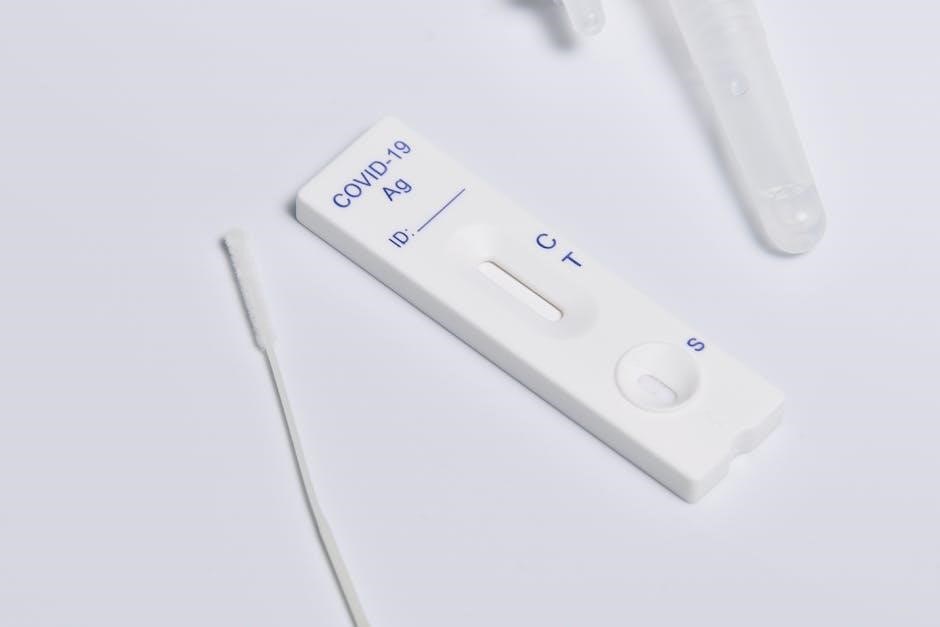
COVID-19 test PDF reports from CVS (via Labcorp) detail key data, including specimen collection date, result status, and specific findings—detected or not detected.
Key Data Points in the PDF Report
The CVS COVID-19 test result PDF contains several crucial data points for understanding your test outcome. Prominently displayed is your unique specimen identification number, essential for tracking and referencing the test. The report clearly states the date and time your sample was collected, providing a timeline for the testing process. You’ll find the date the test was performed by the laboratory, typically Labcorp, offering insight into processing time.
The core result – positive, negative, or inconclusive – is clearly indicated. A “Detected” result signifies the presence of the virus, while “Not Detected” indicates its absence. The PDF also details the specific target gene(s) tested (e.g., N gene, E gene) and their corresponding cycle threshold (Ct) values, which can provide an indication of viral load, though interpretation requires medical expertise. Finally, the report includes a disclaimer outlining the limitations of the test and a contact number for questions. Understanding these elements is vital for interpreting your results accurately.
Understanding Positive, Negative, and Inconclusive Results
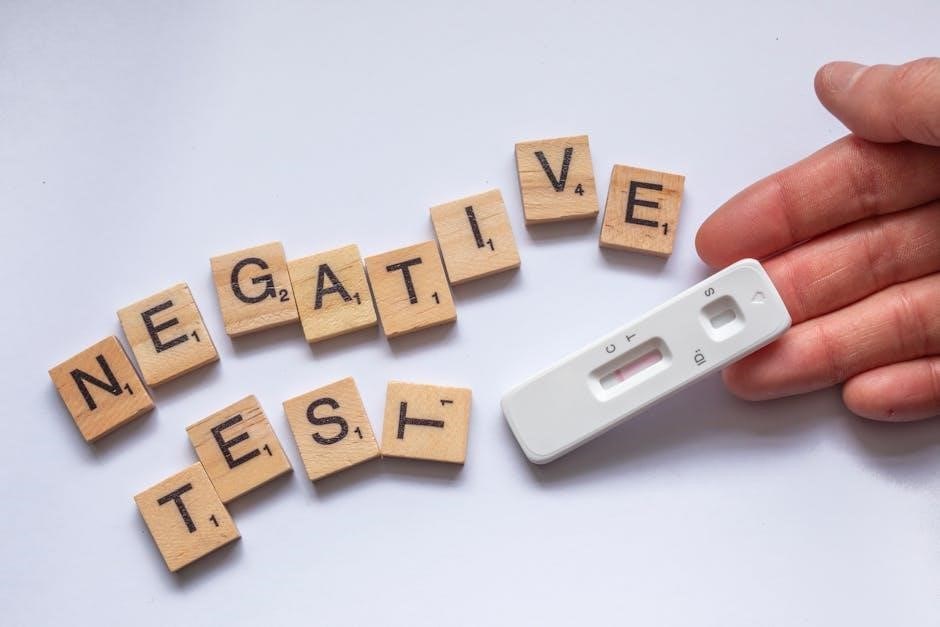
A positive result, often indicated as “Detected” on your CVS COVID-19 test PDF, means viral RNA was found in your sample, confirming a current infection. This necessitates following isolation guidelines and contacting your healthcare provider. A negative result (“Not Detected”) suggests no virus was found at the time of testing, but doesn’t entirely rule out infection, especially if exposure was recent or symptoms are present.
An inconclusive result arises when the test cannot definitively determine the presence or absence of the virus, often due to technical issues or insufficient sample. This usually requires repeat testing. It’s important to remember that test accuracy isn’t absolute; false negatives can occur. Delays in receiving results can heighten anxiety, but understanding these result categories empowers informed decision-making regarding your health and potential exposure risks. Always consult a medical professional for interpretation.
What Does a “Detected” Result Mean?
When your CVS COVID-19 test PDF displays a “Detected” result, it signifies that the laboratory identified the presence of the virus’s genetic material (RNA) within your sample. This confirms you have a current COVID-19 infection. It’s crucial to understand that “Detected” doesn’t indicate the severity of the illness; symptoms can range from mild to severe.
Immediately upon receiving this result, adhere to current CDC isolation guidelines to prevent further spread. Contact your healthcare provider to discuss your condition, potential treatment options, and any underlying health concerns. Reporting your positive result to public health authorities is also vital for tracking and controlling the virus’s spread within the community. Remember, a “Detected” result requires prompt action and responsible behavior to protect yourself and others.
Factors Influencing Result Delivery Time
COVID-19 test result turnaround depends on testing demand, lab processing capacity, potential courier issues, and even the day of the week the test was administered.
Testing Volume and Lab Processing Times
CVS utilizes external laboratories, such as Labcorp, to process COVID-19 tests, and these labs handle samples from numerous sources beyond just CVS testing sites. Consequently, result delivery times are heavily influenced by the overall testing volume these labs are experiencing. During periods of low demand, a relatively quick turnaround – potentially within 24 hours – is achievable. However, when there’s a sudden surge in testing, due to outbreaks or increased community transmission, processing times can extend significantly, often ranging from 72 to 96 hours, or even longer.
It’s crucial to understand that CVS pharmacy staff primarily handle test kit distribution and initial sample collection. Their role ends once the sample is handed off to the courier service. They have limited visibility into, and control over, the subsequent lab processing stages. Therefore, fluctuations in lab workload directly translate to variations in how quickly individuals receive their COVID-19 test results. The labs prioritize processing based on various factors, and individual test turnaround can be unpredictable.
Courier Delays and Sample Handling
The journey of a CVS COVID-19 test sample to the lab isn’t always seamless. A critical step involves a courier service transporting the collected specimens. Unexpected delays can occur during this phase, significantly impacting result delivery times. Instances of couriers missing scheduled pickups, such as failing to collect all sample bags from a location, have been reported, adding an extra day – or more – to the overall process.
Proper sample handling is paramount for accurate results, and any disruption during transport can compromise the integrity of the specimen. While CVS ensures initial collection protocols are followed, control over the sample once it leaves the pharmacy diminishes. These logistical challenges, coupled with potential lab backlogs, contribute to the variability in turnaround times. It’s important to remember that factors outside of CVS’s direct control can influence when your results become available, making precise predictions difficult.
Weekend Testing and Result Availability
Testing conducted on weekends often experiences a delay in result delivery compared to tests processed during the week. This is primarily due to reduced staffing levels at both the courier services and the processing laboratories over the weekend. While CVS pharmacies remain open for testing on Saturdays and Sundays, the subsequent steps in the analysis pipeline operate at a slower pace.
A test taken on a Sunday, for example, might not be picked up by the courier until Monday, and lab processing may be limited until regular business hours resume. Individuals who undergo testing on weekends should anticipate a longer turnaround time, potentially extending into Wednesday or even later. This delay isn’t necessarily indicative of a problem with the test itself, but rather a consequence of the reduced operational capacity during non-business days. Planning accordingly is crucial when timing is important.
Troubleshooting Delayed Results
Regularly check MyChart, contact CVS customer support if needed, and escalate your case for urgent review if results are significantly delayed beyond the expected timeframe.
Checking MyChart Regularly
MyChart serves as the primary hub for accessing your CVS COVID-19 test results, but notifications aren’t always reliable. It’s crucial to proactively check your account, even if you haven’t received an email or text alert indicating availability. Log in frequently to ensure you don’t miss an update, as results can appear without prompting a notification.
Many users have reported receiving their results within MyChart despite not being notified. This highlights the importance of making a habit of checking the platform, especially if several days have passed since your test. Familiarize yourself with the MyChart interface to easily locate your test results section. Remember to verify you are accessing the correct account associated with your CVS testing registration. Consistent monitoring of MyChart is often the quickest way to obtain your results.
Contacting CVS Customer Support
If you’ve consistently checked MyChart and your CVS COVID-19 test results remain unavailable after the stated timeframe (typically 3-5 days, but potentially longer), contacting CVS customer support is the next logical step. Be prepared to provide your test registration details, including the date of the test, location, and any confirmation numbers you received.
While support representatives may not have direct access to lab processing times, they can initiate a trace on your sample and escalate the issue for further investigation. Keep a record of your interactions, including the date, time, representative’s name, and any reference numbers provided. Understand that response times can vary, and a resolution may not be immediate. Patience and persistence are key when navigating delays in result delivery; however, don’t hesitate to follow up if you don’t receive a timely response.
Escalating Your Case for Urgent Review
If initial contact with CVS customer support doesn’t yield a satisfactory resolution regarding your delayed COVID-19 test results PDF, requesting escalation is crucial. Specifically ask for your case to be reviewed by a supervisor or a dedicated team handling result delays. Emphasize the impact the delay has on your ability to follow public health guidelines or return to work/school.
Document all previous communication attempts, including dates, times, representative names, and reference numbers. When escalating, clearly state that you’ve already contacted standard support and require a higher level of intervention. Be firm but polite, and reiterate the urgency of receiving your results. While a guaranteed immediate response isn’t possible, escalation increases the visibility of your case and may expedite the investigation process, potentially uncovering logistical issues or courier delays affecting your sample.

What to Do With a Positive Result
Positive COVID-19 results from your CVS PDF require immediate isolation, contacting your healthcare provider, and reporting to public health authorities as recommended.
Isolation Guidelines and Recommendations
Upon receiving a positive COVID-19 test result from CVS, as indicated in your PDF report, immediate isolation is crucial to prevent further spread. Current guidelines generally recommend isolating for at least five days, starting from the date of your positive test. This means staying home and separating yourself from others within the household as much as possible.
During isolation, monitor your symptoms closely. If symptoms worsen, seek medical attention promptly. It’s also vital to inform close contacts that they may have been exposed, allowing them to get tested and take necessary precautions. Consider wearing a high-quality mask (like an N95) if you must be around others during the isolation period, and ensure adequate ventilation in shared spaces.
Follow the specific recommendations provided by your healthcare provider and local public health authorities, as guidelines can evolve based on community transmission levels and emerging variants. Remember, responsible isolation is a key step in protecting your community.
Contacting Your Healthcare Provider
A positive COVID-19 test result, detailed in your CVS PDF, necessitates contacting your healthcare provider promptly. They can assess your individual risk factors, evaluate your symptoms, and provide personalized medical advice. Discuss potential treatment options, such as antiviral medications, which may be available depending on your health status and the timing of your diagnosis.
Your doctor can also advise on managing symptoms effectively and monitoring for any complications. Don’t hesitate to reach out even if your symptoms are mild; early intervention can often prevent more severe illness. Be prepared to share details about your test result, symptom onset, and any underlying health conditions.
Furthermore, your healthcare provider can offer guidance on when it’s safe to end isolation and return to normal activities, ensuring you don’t pose a risk to others. They are your primary resource for navigating a positive COVID-19 diagnosis.
Reporting Your Results to Public Health Authorities
While CVS typically reports positive COVID-19 test results – as detailed in your PDF – to local and state public health authorities, confirming this reporting is a prudent step. Public health agencies rely on accurate data to track the spread of the virus, identify outbreaks, and allocate resources effectively.
You can often find information on how to directly report your results on your state’s Department of Health website. This may involve a simple online form or a phone call. Reporting helps contribute to a more comprehensive understanding of community transmission levels.
Even if CVS has already reported, self-reporting can serve as a verification measure. It’s a civic responsibility that supports public health efforts and helps protect vulnerable populations. Ensure you have your CVS test result PDF readily available when reporting, as it may be requested for verification purposes.